
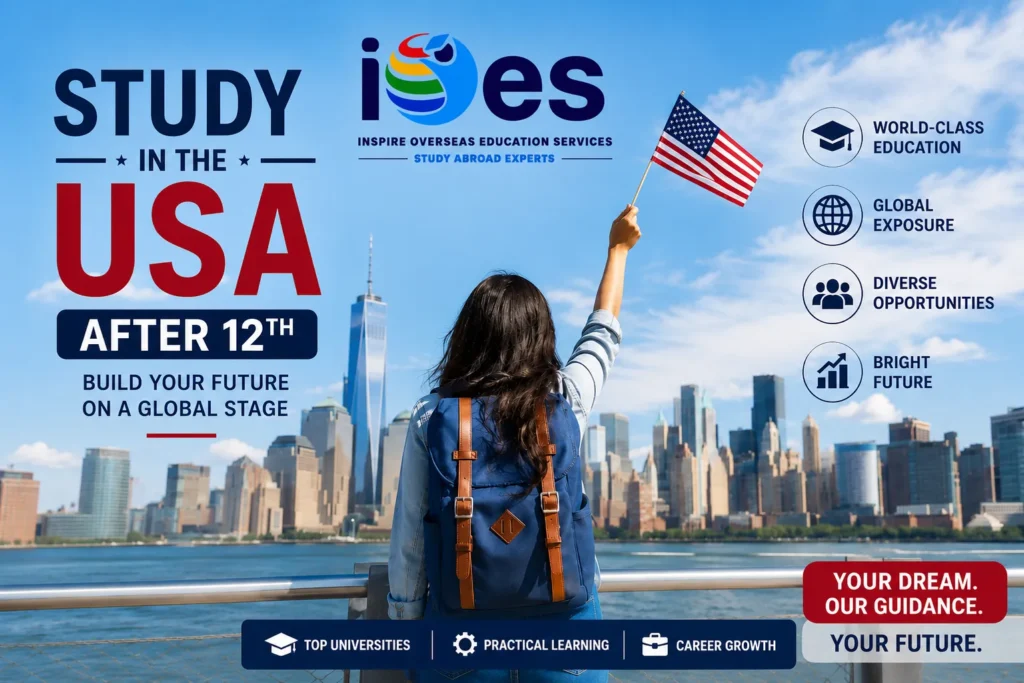
The United States has become one of the most preferred study destinations for Indian students who want access to world-class education, global career opportunities, and advanced learning environments. Every year, thousands of students choose to study in the USA after 12th because American universities offer internationally recognized degrees, flexible academic programs, practical exposure, and excellent career growth opportunities.
For many students, studying abroad is not just about earning a degree. It is about gaining international exposure, building global networks, improving career prospects, and experiencing a multicultural environment. From engineering and computer science to business management and healthcare, the USA offers some of the best undergraduate programs for international students.
Indian students in USA universities benefit from cutting-edge technology, research opportunities, internships, and strong industry connections. Whether you want to pursue engineering, data science, business, artificial intelligence, medicine, or creative arts, the USA provides countless opportunities for students after 12th.
However, many students also have questions such as:
- How to study in USA after 12th?
- What are the requirements to study in USA?
- How much does it cost?
- Which are the best universities?
- Is the USA safe for Indian students?
- Can students work while studying?
This complete guide will help you understand everything about study in USA for Indian students after 12th, including eligibility, admission process, scholarships, costs, visa requirements, top universities, and career opportunities.
Why Study in USA After 12th?
The USA continues to attract international students because of its strong education system, global reputation, and career-focused learning approach. Students who study in USA after 12th gain access to advanced academic resources, practical training, and worldwide employment opportunities.
World-Class Universities
The USA is home to some of the world’s top-ranked universities, including Harvard University, Stanford University, MIT, and the University of California system. American universities consistently rank among the best institutions globally because of their research facilities, academic excellence, and innovation-driven education.
Degrees earned from US universities are recognized worldwide, which increases employability and career growth opportunities. Indian students in USA universities often gain access to advanced laboratories, expert faculty, and modern learning environments.
Flexible Education System
One of the biggest advantages of the American education system is flexibility. Students can explore multiple subjects before selecting a specialization. Unlike many countries where students are locked into a single stream early, the USA allows students to customize their academic journey.
For example, a student pursuing computer science can also study business management, psychology, or data analytics alongside their core subjects. This flexibility helps students build multidisciplinary skills that are highly valuable in the global job market.
Better Career Opportunities
The USA offers excellent career opportunities for international students. Many universities have strong industry connections with leading companies such as Google, Microsoft, Amazon, Apple, Tesla, and Meta.
Students can gain practical experience through internships, campus placements, research projects, and industry collaborations. Programs like OPT (Optional Practical Training) and CPT (Curricular Practical Training) also allow students to gain work experience during or after their studies.
Global Exposure for Indian Students
Indian students in USA universities experience a multicultural environment where they interact with students from different countries and backgrounds. This global exposure improves communication skills, cultural understanding, leadership abilities, and adaptability.
Studying abroad also helps students become more independent and confident. These qualities are highly appreciated by global employers.
STEM and Research Advantages
The USA is considered one of the best destinations for STEM education, including science, technology, engineering, and mathematics. Universities invest heavily in research, innovation, and advanced technology.
Students pursuing engineering, AI, robotics, cybersecurity, biotechnology, and computer science often benefit from practical learning and real-world research exposure.
High Salary Potential After Graduation
Graduates from American universities often receive attractive salary packages. Fields such as artificial intelligence, data science, software engineering, healthcare, finance, and cybersecurity offer strong earning potential.
Students who gain international education and work experience in the USA also improve their long-term career opportunities globally.
Best Courses to Study in USA After 12th for Indian Students
Choosing the right course is one of the most important decisions for students planning to study in USA after 12th. The USA offers a wide variety of undergraduate programs across multiple disciplines.
Engineering Courses
Engineering remains one of the most popular choices among Indian students. American universities provide practical and research-oriented engineering education.
Popular engineering specializations include:
- Mechanical Engineering
- Civil Engineering
- Electrical Engineering
- Computer Engineering
- Aerospace Engineering
- Chemical Engineering
Engineering graduates in the USA often receive strong placement opportunities in global companies.
Computer Science & AI
Computer science is among the fastest-growing fields in the USA. With the increasing demand for artificial intelligence, machine learning, cloud computing, and cybersecurity professionals, many students choose computer science programs after 12th.
Popular areas include:
- Artificial Intelligence
- Data Science
- Cybersecurity
- Software Development
- Machine Learning
- Cloud Computing
- Blockchain Technology
The USA is home to some of the world’s largest technology companies, making it an excellent destination for tech-focused careers.
Business & Management
Business and management courses are ideal for students interested in entrepreneurship, finance, marketing, or leadership roles.
Popular programs include:
- Business Administration
- Finance
- Marketing
- International Business
- Entrepreneurship
- Accounting
- Supply Chain Management
American universities emphasize practical business education through case studies, internships, and industry projects.
Medical & Health Sciences
Students interested in healthcare and medical sciences can pursue programs such as:
- Nursing
- Biomedical Sciences
- Public Health
- Pharmacy
- Healthcare Management
- Pre-Medical Programs
The healthcare industry in the USA continues to grow rapidly, creating significant career opportunities.
Data Science & Cybersecurity
The demand for data science and cybersecurity professionals has increased worldwide. Students pursuing these fields gain expertise in data analytics, digital security, ethical hacking, and AI technologies.
These programs offer strong job prospects and high salary packages.
Arts, Design & Media
The USA also offers excellent opportunities for creative students.
Popular programs include:
- Graphic Design
- Animation
- Film Studies
- Fashion Design
- Journalism
- Digital Media
- Communication Studies
Students gain exposure to advanced tools, creative projects, and industry collaborations.
Hospitality & Tourism
Hospitality management is another growing field for international students.
Programs include:
- Hotel Management
- Event Management
- Tourism Management
- Culinary Arts
These courses focus on practical training and customer service management.
| Stream | Popular Courses | Duration | Average Fees |
|---|---|---|---|
| Engineering | Mechanical, Civil, Computer Engineering | 4 Years | $25,000–$55,000 |
| Computer Science | AI, Data Science, Cybersecurity | 4 Years | $30,000–$60,000 |
| Business | BBA, Finance, Marketing | 4 Years | $20,000–$50,000 |
| Healthcare | Nursing, Public Health | 4 Years | $25,000–$45,000 |
| Arts & Media | Design, Journalism | 3–4 Years | $20,000–$40,000 |
Requirements to Study in USA After 12th
Understanding the requirements to study in USA is essential for a successful application process.
Academic Eligibility
Students must complete 12th grade from a recognized board such as CBSE, ISC, or State Boards. Most universities require good academic performance, especially in relevant subjects.
Top universities generally prefer students with strong grades, extracurricular achievements, leadership activities, and community involvement.
English Language Tests (IELTS/TOEFL/PTE)
International students must demonstrate English language proficiency.
Commonly accepted exams include:
- IELTS
- TOEFL
- PTE
- Duolingo English Test
The required score depends on the university and program.
SAT/ACT Requirements
Some American universities require standardized test scores such as SAT or ACT. However, many universities have now adopted test-optional policies.
Competitive universities may still consider SAT scores during admissions.
SOP & LOR
A Statement of Purpose (SOP) explains the student’s academic goals, career aspirations, and reasons for choosing a specific course and university.
Letters of Recommendation (LORs) from teachers or mentors also strengthen applications.
Passport & Financial Documents
Students need:
- Valid passport
- Academic transcripts
- Bank statements
- Financial proof
- Passport-size photographs
- Admission documents
Financial documents are important to show the ability to cover tuition fees and living expenses.
Student Visa Requirements
Indian students need an F1 student visa to study in USA for international students.
Visa requirements include:
- University admission letter (I-20 Form)
- SEVIS fee payment
- Financial proof
- Visa interview
- Passport and documents
Step-by-Step Process to Study in USA After 12th
Many students dream of studying in the United States, but they often feel confused about where to start and how the complete process works. Understanding the correct admission journey is important because even a small mistake in applications, documentation, or visa procedures can delay admissions.
For Indian students, planning early can make the entire process smoother and less stressful. From selecting the right university to getting a student visa approved, every step plays a major role in shaping your study abroad journey.
If you are wondering how to study in USA after 12th, this complete step-by-step guide will help you understand the entire process in a simple and clear way.
1. Choose Course & University
The first and most important step is choosing the right course and university. Students should select a program based on their interests, career goals, academic strengths, and future job opportunities.
The USA offers thousands of undergraduate programs in fields such as:
- Engineering
- Computer Science
- Artificial Intelligence
- Business Management
- Healthcare
- Data Science
- Hospitality
- Media & Design
Before finalizing universities, students should compare:
- Course curriculum
- University rankings
- Tuition fees
- Scholarship opportunities
- Internship options
- Campus facilities
- Location and safety
- International student support
Students should avoid selecting a university only based on rankings. Factors such as affordability, career outcomes, internship opportunities, and practical learning are equally important.
Tip for Indian Students
Create three university categories:
- Dream Universities
- Moderate Universities
- Safe Universities
This improves admission chances and helps students build a balanced application strategy.
2. Check Eligibility
After shortlisting universities, students should carefully review admission eligibility requirements.
Every university may have slightly different admission criteria depending on the course and academic level.
Common eligibility requirements include:
- Completion of 12th grade from a recognized board
- Good academic scores
- English language proficiency
- SAT or ACT scores (if required)
- Extracurricular activities
- Statement of Purpose (SOP)
- Letters of Recommendation (LORs)
Top universities generally expect strong academic performance and well-rounded student profiles.
Students applying for technical or engineering programs may also need strong mathematics and science backgrounds.
Minimum Academic Requirements
Most universities prefer:
- 60%–70% minimum for average universities
- 80%+ for top-ranked universities
Competitive institutions may have higher expectations.
3. Prepare for IELTS/SAT
International students must demonstrate English language proficiency because courses in the USA are taught in English.
English Language Tests
Popular exams accepted by American universities include:
- IELTS
- TOEFL
- PTE
- Duolingo English Test
Students should check the exact score requirements for each university.
SAT/ACT Preparation
Some universities may require standardized exams such as SAT or ACT.
Although many universities now follow test-optional policies, strong SAT scores can still improve admission chances and scholarship opportunities.
Preparation Tips
- Start preparation at least 6–8 months early
- Practice mock tests regularly
- Improve reading and vocabulary skills
- Focus on time management
- Understand exam patterns properly
Preparing early gives students enough time for retakes if needed.
4. Submit Applications
Once students complete test preparation and gather documents, they can begin the application process.
Most universities accept applications through:
- University websites
- Common Application portals
- Coalition Application platforms
Documents Required During Applications
Students usually need:
- Academic transcripts
- Passport copy
- IELTS/TOEFL scores
- SAT/ACT scores (if required)
- SOP
- LORs
- Resume or CV
- Extracurricular certificates
Importance of SOP
A strong Statement of Purpose helps universities understand:
- Student goals
- Academic interests
- Career aspirations
- Reasons for choosing the course
- Reasons for choosing the university
Students should avoid copied SOPs because universities prefer authentic and personalized applications.
Application Deadlines
Most universities have:
- Fall Intake (August/September)
- Spring Intake (January)
Students should apply early because scholarships and seats may fill quickly.
5. Receive Offer Letter
After reviewing applications, universities send admission decisions.
Students may receive:
- Conditional Offer Letter
- Unconditional Offer Letter
- Rejection Letter
- Waitlist Status
Conditional Offer Letter
This means students must fulfill additional requirements before final admission confirmation.
Unconditional Offer Letter
This confirms full admission acceptance.
Students should compare:
- Tuition fees
- Scholarships
- Program quality
- Internship opportunities
- Accommodation facilities
before accepting the final offer.
6. Apply for F1 Student Visa
After confirming admission, students can begin the USA student visa process.
Indian students usually require an F1 student visa for undergraduate studies.
F1 Visa Application Process
The process generally includes:
- Receive I-20 Form from university
- Pay SEVIS fee
- Complete DS-160 form
- Schedule visa appointment
- Attend biometrics appointment
- Attend visa interview
Important Visa Documents
Students must carry:
- Valid passport
- I-20 form
- Admission letter
- Financial proof
- Academic documents
- Visa fee receipt
- Passport-size photographs
Visa Interview Tips
Students should:
- Speak confidently
- Explain academic goals clearly
- Demonstrate financial stability
- Answer honestly
- Show genuine study intentions
A well-prepared interview significantly improves visa approval chances.
7. Arrange Finances
Financial planning is extremely important for students planning to study abroad USA.
Students and parents should estimate:
- Tuition fees
- Living expenses
- Accommodation costs
- Health insurance
- Travel expenses
- Emergency funds
Education Loans
Many Indian students use education loans to finance their studies.
Banks and financial institutions may provide loans for:
- Tuition fees
- Living expenses
- Flight tickets
- Study materials
Scholarships & Financial Aid
Students should actively apply for:
- Merit scholarships
- Need-based scholarships
- Government scholarships
- University grants
Scholarships can reduce financial pressure significantly.
8. Fly to the USA
After receiving visa approval, students can finalize travel plans.
Pre-Departure Preparation
Students should:
- Book flight tickets
- Arrange accommodation
- Purchase health insurance
- Carry essential documents
- Exchange currency
- Pack according to weather conditions
Important Documents to Carry
Always keep these documents in hand luggage:
- Passport
- Visa documents
- I-20 form
- Admission letter
- Financial documents
- Accommodation details
Arrival in the USA
After arriving in the USA, students should:
- Attend university orientation
- Open a bank account
- Purchase local SIM cards
- Understand transportation systems
- Connect with student communities
Orientation programs help international students adjust to campus life more comfortably.
Top Universities in USA for Indian Students
The United States is home to some of the world’s most prestigious universities, attracting thousands of international students every year. Indian students in USA universities benefit from advanced education systems, practical learning environments, strong research opportunities, and excellent career prospects.
Choosing the right university is one of the most important decisions for students planning to study in USA for international students programs. Students should consider factors such as university rankings, tuition fees, scholarships, internships, campus safety, and career outcomes before applying.
The USA offers both public and private universities that provide high-quality education across multiple disciplines including engineering, business, computer science, healthcare, artificial intelligence, and data science.
Harvard University
Harvard University is one of the most recognized universities in the world. Known for academic excellence and leadership-focused education, Harvard attracts students from across the globe.
The university offers outstanding undergraduate programs in:
- Business
- Economics
- Law
- Medicine
- Political Science
- Computer Science
Harvard also provides access to world-class faculty, research opportunities, and global networking exposure.
Massachusetts Institute of Technology (MIT)
MIT is considered one of the best universities for engineering, technology, and innovation.
Students interested in:
- Artificial Intelligence
- Robotics
- Computer Science
- Aerospace Engineering
- Mechanical Engineering
- Data Science
often choose MIT because of its research-focused education and strong industry connections.
MIT graduates are highly valued by global technology companies.
Stanford University
Stanford University is globally known for entrepreneurship, innovation, and technology education.
Located near Silicon Valley, Stanford offers students direct exposure to some of the world’s largest technology companies and startup ecosystems.
Popular programs include:
- Computer Science
- Engineering
- Business Management
- Artificial Intelligence
- Economics
Stanford graduates frequently secure leadership positions in global companies.
University of California System
The University of California system includes several highly ranked universities such as:
- UCLA
- UC Berkeley
- UC San Diego
- UC Davis
- UC Irvine
These universities are popular among Indian students in USA because of their research facilities, academic quality, and industry exposure.
Students pursuing STEM education, healthcare, business, and technology programs often prefer UC universities.
Arizona State University
Arizona State University has become a preferred destination for international students because of its affordable tuition fees, innovation-focused programs, and strong student support services.
The university is known for:
- Engineering
- Computer Science
- Business Programs
- Sustainability Studies
- Data Analytics
ASU also offers various scholarships for international students.
Purdue University
Purdue University is highly respected for engineering and aviation programs.
The university provides excellent practical learning opportunities and strong placement support.
Popular fields include:
- Mechanical Engineering
- Civil Engineering
- Computer Engineering
- Aeronautics
- Artificial Intelligence
Purdue graduates are highly employable in technical industries.
New York University (NYU)
NYU is one of the most popular universities for students interested in business, media, finance, arts, and communication studies.
Located in New York City, the university provides excellent exposure to global industries and corporate networks.
Students at NYU benefit from:
- Internship opportunities
- Industry projects
- Diverse student communities
- Strong global networking
Factors to Consider Before Choosing a University
Students planning to study in USA after 12th should compare universities based on:
- Tuition fees
- Course structure
- Internship opportunities
- Scholarship availability
- Campus safety
- Research facilities
- Graduate employability
- International student support
Choosing the right university can significantly impact academic success and future career growth.
| University | Popular Courses | Average Tuition Fees |
|---|---|---|
| Harvard University | Business, Law, Medicine | $50,000–$60,000 |
| MIT | Engineering, AI, Robotics | $55,000–$60,000 |
| Stanford University | Computer Science, Business | $55,000–$65,000 |
| University of California | STEM, Healthcare, Business | $35,000–$55,000 |
| Arizona State University | Business, Technology | $25,000–$35,000 |
| Purdue University | Engineering, Aviation | $30,000–$40,000 |
| New York University (NYU) | Finance, Media, Arts | $50,000–$60,000 |
Cost of Studying in USA After 12th
Understanding the total cost of education is extremely important for Indian students planning to study abroad USA. The overall expense depends on factors such as university type, course, location, lifestyle, and accommodation choices.
The USA offers both affordable and premium universities, giving students multiple options based on their financial situation and career goals.
Students should calculate the complete cost before applying because expenses include not only tuition fees but also accommodation, health insurance, transportation, food, and personal spending.
Tuition Fees
Tuition fees are usually the largest expense for international students.
The fee structure depends on:
- Public or private university
- Course specialization
- University ranking
- Program duration
Average Tuition Fees
- Public Universities: $20,000–$40,000 per year
- Private Universities: $40,000–$70,000 per year
Technical and medical programs may have higher tuition fees compared to arts or humanities courses.
Students should also check whether universities offer scholarships or financial aid opportunities.
Living Expenses
Living expenses vary depending on the city and lifestyle.
Students living in cities such as:
- New York
- Boston
- San Francisco
- Los Angeles
may spend significantly more compared to smaller cities.
Living expenses generally include:
- Food
- Transportation
- Utilities
- Mobile and internet bills
- Personal expenses
The average annual living cost ranges between $10,000–$20,000.
Accommodation Costs
Accommodation is another major expense for international students.
Students can choose from:
- University dormitories
- Shared apartments
- Private apartments
- Homestays
On-Campus Housing
University housing is convenient and helps students adjust quickly to campus life.
Off-Campus Housing
Shared apartments are often more affordable and provide greater flexibility.
Accommodation costs generally range between $500–$1,500 per month depending on the location.
Health Insurance
Health insurance is mandatory for most international students in the USA.
Healthcare in America can be very expensive, so insurance coverage is extremely important.
Health insurance may cover:
- Medical consultations
- Emergency treatments
- Hospitalization
- Prescription medicines
Average annual health insurance costs range from $1,000–$3,000.
Travel Expenses
Students should also include travel-related expenses in their financial planning.
Travel expenses include:
- Flight tickets
- Visa fees
- Local transportation
- Initial settlement costs
- Luggage expenses
Students usually spend more during the first year because of relocation and setup costs.
Estimated Annual Cost Breakdown
| Expense Type | Estimated Annual Cost |
|---|---|
| Tuition Fees | $20,000–$70,000 |
| Accommodation | $6,000–$15,000 |
| Food & Groceries | $3,000–$5,000 |
| Health Insurance | $1,000–$3,000 |
| Transportation | $1,000–$2,000 |
| Miscellaneous Expenses | $2,000–$4,000 |
Tips to Reduce Study Costs in USA
Students can reduce expenses by:
- Applying for scholarships
- Choosing affordable universities
- Living in shared accommodations
- Working part-time on campus
- Using student discounts
- Managing monthly budgets carefully
Proper financial planning can make studying in the USA more manageable for Indian students.
Scholarships for Indian Students in USA
Scholarships play a major role in helping students manage education expenses abroad. Many universities and organizations provide financial aid opportunities for students planning to study in USA for Indian students after 12th.
Students with strong academic records, leadership abilities, extracurricular achievements, and financial need can qualify for different scholarship programs.
Applying early is extremely important because scholarship deadlines may close before university admission deadlines.
Merit-Based Scholarships
Merit-based scholarships are awarded to students with outstanding academic achievements.
Universities consider:
- High academic scores
- Leadership qualities
- Community involvement
- Extracurricular achievements
- Competitive exam scores
Students with strong profiles often receive partial or full tuition fee waivers.
Top universities may also provide special honors scholarships for exceptional students.
Need-Based Scholarships
Need-based scholarships support students who require financial assistance.
These scholarships are usually based on:
- Family income
- Financial background
- Economic circumstances
Students may need to submit financial documents and income proof during applications.
Need-based financial aid can significantly reduce education expenses.
Government Scholarships
Government-funded scholarships help deserving students pursue higher education abroad.
These scholarships may cover:
- Tuition fees
- Living expenses
- Health insurance
- Travel costs
Government scholarship programs are highly competitive and require strong academic performance.
University Scholarships
Many American universities offer scholarships specifically for international students.
These scholarships may include:
- Tuition fee reductions
- Research assistantships
- Academic excellence awards
- International student grants
Students should visit official university websites regularly for updated scholarship information.
USA Student Visa Process for Indian Students
For Indian students planning to pursue higher education abroad, understanding the USA student visa process is one of the most important steps. Every year, thousands of students apply for admission to American universities because the USA offers world-class education, global exposure, advanced research opportunities, and excellent career growth. If you are planning to study in USA for international students programs, knowing the visa process in detail can help you avoid delays and improve your chances of approval.
Types of Student Visas
The United States offers different types of student visas depending on the course and institution:
- F1 Visa – The most common visa for academic studies such as bachelor’s, master’s, MBA, or PhD programs.
- J1 Visa – Issued for exchange programs, internships, or cultural exchange studies.
- M1 Visa – Designed for vocational or non-academic training programs.
Among these, the F1 visa is the preferred option for most Indian students applying to universities and colleges in the USA.
F1 Visa Process
The F1 visa process includes several important steps:
- Receive admission confirmation from a SEVP-approved US university.
- Obtain the I-20 form from the institution.
- Pay the SEVIS fee online.
- Complete the DS-160 visa application form.
- Schedule visa appointments for biometrics and interview.
- Attend the visa interview at the US Embassy or Consulate.
Students must provide accurate information and demonstrate genuine academic intent during the process. Early preparation is highly recommended because visa slots may fill quickly during peak admission seasons.
Visa Interview Tips
The US visa interview is an important stage for Indian students. Visa officers mainly evaluate your academic goals, financial capability, and future plans.
Helpful visa interview tips include:
- Be confident and answer honestly.
- Clearly explain why you selected the university and course.
- Demonstrate strong financial support.
- Show ties to India and future career goals.
- Keep all required documents organized.
Students who prepare thoroughly usually feel more comfortable during the interview process.
Required Documents
Indian students generally need the following documents for a USA student visa:
- Valid passport
- University admission letter
- I-20 form
- DS-160 confirmation page
- SEVIS fee receipt
- Passport-size photographs
- Academic transcripts and test scores
- Financial proof and bank statements
- Scholarship letters (if applicable)
Additional documents may be requested depending on the university or visa category.
Visa Approval Timeline
The visa approval timeline may vary depending on the application season and embassy workload. In most cases:
- DS-160 submission and appointment scheduling can take a few weeks.
- Visa decisions are often made immediately after the interview.
- Passport delivery usually takes a few business days after approval.
Students should ideally begin the process at least 3–6 months before the course start date.
Part-Time Jobs & Work Opportunities in USA
One of the biggest advantages of studying in the USA is access to valuable work opportunities. International students can gain practical experience, improve professional skills, and support living expenses through part-time work. Many students also benefit from strong career growth opportunities after graduation.
On-Campus Jobs
F1 visa students are usually allowed to work on-campus for up to 20 hours per week during academic sessions and full-time during holidays.
Popular on-campus jobs include:
- Library assistant
- Research assistant
- Teaching assistant
- Campus cafeteria staff
- Administrative office support
These jobs help students develop communication and professional skills while studying.
OPT & CPT
OPT and CPT are major benefits available to international students in the USA.
- CPT (Curricular Practical Training): Allows students to work in internships or training programs directly related to their course.
- OPT (Optional Practical Training): Enables students to work in the USA after graduation for up to 12 months.
STEM graduates may also receive a 24-month OPT extension, creating excellent long-term career opportunities.
Internship Opportunities
American universities strongly encourage internships because they provide practical industry exposure. Students can work with multinational companies, startups, healthcare organizations, technology firms, and research institutions.
Internships help students:
- Build industry connections
- Gain real-world experience
- Improve employability
- Increase chances of full-time job offers
Many students secure permanent employment through internship programs.
Average Student Earnings
Part-time wages in the USA vary depending on location, job role, and university policies. International students generally earn between $10–$20 per hour through campus jobs and internships.
While part-time work may not cover all expenses, it can significantly help students manage daily living costs and gain financial independence while studying.
Challenges Indian Students Face in USA
Although studying abroad offers excellent opportunities, Indian students may also experience certain challenges while adjusting to a new country and education system.
Cultural Adjustment
The cultural environment in the USA can feel very different initially. Students may need time to adapt to communication styles, classroom participation, food habits, and social norms.
Participating in student communities and university events can make cultural adjustment easier.
Homesickness
Being away from family and friends often creates emotional challenges for students. Homesickness is common during the first few months of study abroad.
Regular communication with family, joining Indian student groups, and maintaining a healthy routine can help students feel more comfortable.
Managing Expenses
Living expenses in the USA can be high, especially in major cities. Students must carefully manage tuition fees, accommodation, food, transportation, and insurance costs.
Budget planning and part-time jobs can help students control expenses effectively.
Academic Pressure
American universities emphasize assignments, research work, presentations, and continuous assessments. Students may initially find the academic workload demanding.
Good time management and regular study habits are essential for maintaining academic performance.
Visa Compliance
International students must strictly follow visa regulations, including attendance requirements, work restrictions, and academic enrollment rules.
Failure to comply with visa conditions may affect immigration status and future opportunities in the USA.
Why Students Choose IOES for Study in the USA Consultants
Many students and parents prefer professional guidance by the IOES because the admission and visa process can be complex. Experienced study in the USA consultants help students make informed decisions and improve application success rates.
University Selection Support
Consultants help students shortlist universities based on:
- Academic background
- Career goals
- Budget
- Scholarship opportunities
- Preferred location
This ensures students apply to universities that match their profile and future plans.
Visa Assistance
Professional guidance can help students prepare visa documents, complete application forms accurately, and improve interview preparation.
This reduces common mistakes and increases confidence during the visa process.
SOP & Application Guidance
A strong SOP (Statement of Purpose) is extremely important for university admissions. Consultants assist students in creating personalized and impactful applications that highlight academic achievements and career goals.
Scholarship Support
Many universities in the USA offer scholarships and financial aid to international students. Consultants help students identify scholarship opportunities and complete applications correctly.
Professional USA education consultants can simplify the entire admission and visa process.
Career Opportunities After Studying in USA
The USA offers excellent career prospects for international graduates because of its strong economy, advanced industries, and global business environment.
High-Paying Industries
Some of the highest-paying industries for graduates in the USA include:
- Information Technology
- Artificial Intelligence
- Healthcare
- Finance
- Data Science
- Engineering
- Business Management
Graduates from top universities often receive competitive salary packages and global career exposure.
STEM Career Demand
STEM (Science, Technology, Engineering, and Mathematics) fields have particularly high demand in the USA. Students specializing in STEM programs often benefit from extended OPT opportunities and better employment prospects.
The growing demand for skilled professionals makes the USA a preferred destination for long-term career growth.
Global Job Opportunities
A US degree is globally recognized and valued by employers worldwide. Students gain international exposure, industry experience, and networking opportunities that improve employability across multiple countries.
Many multinational companies actively recruit graduates from American universities.
Pathways for Higher Education
Students who complete undergraduate or master’s programs in the USA can also pursue higher education opportunities such as:
- PhD programs
- Research fellowships
- Specialized certifications
- Professional licensing courses
The American education system offers flexibility for continuous academic and professional development.
FAQs – Study in the USA After 12th
1. Can Indian students study in USA after 12th?
2. What are the requirements to study in USA?
3. Is SAT mandatory for USA universities?
4. How much does it cost to study in USA after 12th?
5. Which course is best in USA after 12th?
6. Can students work while studying in USA?
7. How can education consultants help students study abroad?
8. Which visa is required to study in USA?
9. Is USA safe for Indian students?
10. How long does the admission process take?
Conclusion
Choosing to study in the USA after 12th is a life-changing opportunity for students who want access to world-class education, international exposure, and strong global career opportunities. The USA continues to remain one of the top destinations for higher education because of its flexible education system, advanced research facilities, practical learning environment, and excellent job prospects.
From engineering and computer science to business, healthcare, and artificial intelligence, students can find programs that match their academic interests and long-term career goals. Although the admission and visa process may initially seem challenging, proper planning and expert guidance can make the journey much smoother.
Students planning to study abroad USA should begin their preparation early by:
- Shortlisting suitable universities
- Understanding admission requirements
- Preparing academic and financial documents
- Exploring scholarship opportunities
- Preparing for IELTS/SAT exams
- Researching career-focused courses
Professional guidance from experienced study abroad consultants can also help students avoid mistakes during applications, scholarships, and visa procedures.
For Indian students looking to build a successful international career, study in the USA for Indian students after 12th remains one of the best pathways toward academic excellence, global exposure, and long-term professional growth.

Varun Gupta – Founder, IOES | Study Abroad Consultant
Hi, I am Varun Gupta, Founder of IOES, a study abroad consultant in Gurgaon. I bring over 15 years of professional experience, including my previous role as Team Leader with the Department of Immigration and Border Protection (DIBP) at the Australian High Commission, New Delhi.
My background includes Australian immigration procedures, client services, and regulatory processes. Through IOES, I aim to help students make informed decisions about overseas education, university selection, admissions, and student visa requirements.
I share practical insights to help students and parents better understand the study abroad process and plan their international education journey with confidence.